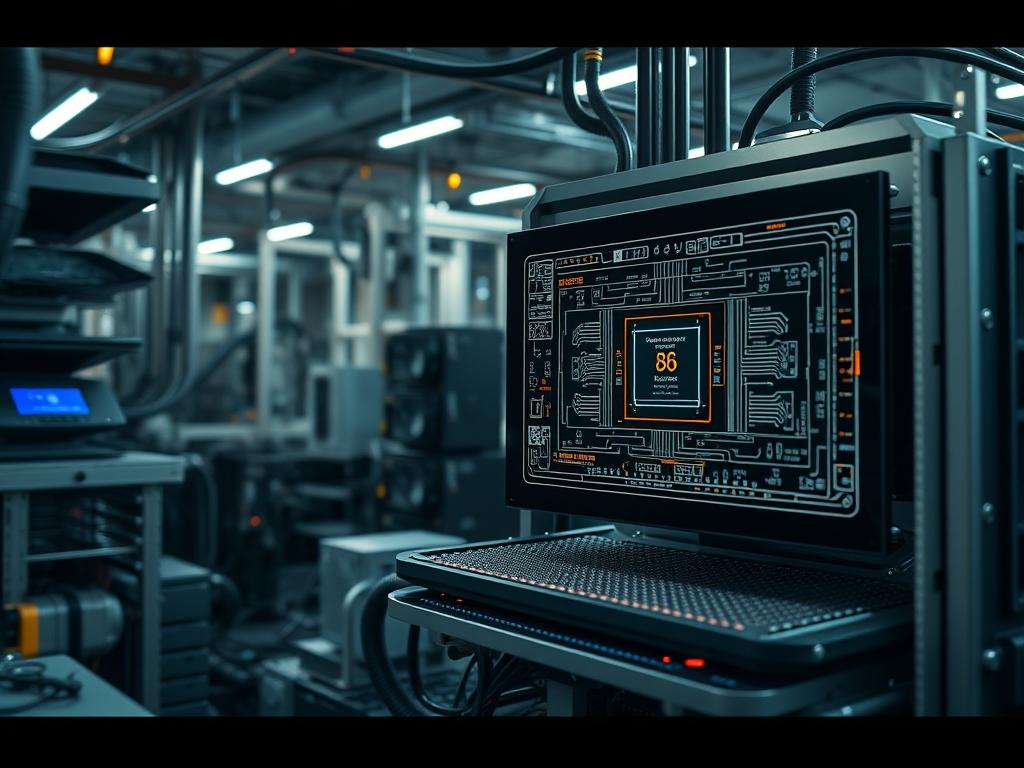
Ram thermal dissipation is a foundational metric within micro-architecture and high-density computing environments. As memory modules transition from DDR4 to DDR5, the integration of on-DIMM Power Management Integrated Circuits (PMICs) has shifted the thermal load from the motherboard directly to the module itself. In the context of enterprise-grade network infrastructure and cloud server arrays, managing thermal-inertia is critical for maintaining signal integrity and preventing packet-loss at the hardware level. Excessive heat reduces the efficiency of the silicon, leading to higher leakage currents and potential bit-flips. This manual addresses the engineering requirements for mitigating thermal bottlenecks using passive heat spreaders and active airflow management. The goal is to ensure a predictable throughput and low latency across the memory bus by maintaining the junction temperature within defined JEDEC tolerances. Effective dissipation prevents the onset of thermal throttling; this ensures that system performance remains idempotent under heavy computational payloads. By treating thermal management as a primary layer of the technical stack, architects can achieve higher concurrency and sustain high-volume data payloads without hardware-induced jitter.
Technical Specifications
| Requirement | Default Operating Range | Protocol/Standard | Impact Level | Recommended Resources |
| :— | :— | :— | :— | :— |
| Operating Temperature | 0C to 85C (Case Temp) | JEDEC JESD21C | 10 | 6061 Aluminum Alloy |
| PMIC Voltage Output | 1.1V to 1.35V | JEDEC JESD79-5 | 8 | Thermal Pad (6.0 W/mK) |
| Monitoring Interface | I2C / I3C Sideband | SMBus 2.0 | 7 | BMC / IPMI Controller |
| Airflow Velocity | 1.5 to 3.0 m/s | ASHRAE A1-A4 | 9 | PWM Duty Cycle > 60 percent |
| Thermal Impedance | < 0.20 C-in2/W | ASTM D5470 | 9 | Phase-Change Material |
| Memory Bus Frequency | 4800 to 8000 MT/s | DDR5 Standard | 8 | Shielded Trace Routing |
The Configuration Protocol
Environment Prerequisites:
Successful deployment of thermal dissipation modules requires adherence to strictly defined environmental and mechanical baselines. All hardware must comply with the JEDEC JESD79-5 standard for DDR5 or the JESD79-4 standard for DDR4. The operating environment must maintain a static-free zone with a humidity range between 40 percent and 60 percent to prevent electrostatic discharge during installation. Software dependencies for monitoring include the lm-sensors package (version 3.6.0 or higher) and the ipmitool utility for out-of-band management. Administrative access to the BIOS/UEFI interface is required to modify fan curves and power-down modes. High-precision measurements should be validated using a fluke-multimeter or a calibrated infrared thermal imager to identify local hotspots that software sensors might overlook.
Section A: Implementation Logic:
The engineering design for ram thermal dissipation centers on the reduction of the thermal resistance path between the Dynamic Random Access Memory (DRAM) dies and the ambient environment. Heat spreaders operate on the principle of thermal-inertia; they absorb transient heat spikes and distribute them across a larger surface area to be carried away by forced convection. In high-density server nodes, the proximity of DIMM slots creates a “thermal shadow” where one module blocks the airflow of the next. To solve this, the spreader geometry must be optimized for laminar flow to avoid turbulence that traps heat. The use of high-conductivity Thermal Interface Material (TIM) is non-negotiable for bridging the microscopic air gaps between the chip surface and the spreader. Without this interface, signal-attenuation increases as the resistive properties of the silicon change with temperature, leading to increased latency in memory-intensive operations.
Step-By-Step Execution
1. Thermal Interface Material (TIM) Application
Clean the surface of the DRAM chips using 99 percent anhydrous isopropyl alcohol. Apply a high-conductivity thermal pad or phase-change material across the central axis of each chip.
System Note:
This ensures the elimination of air pockets. Air has extremely high thermal resistance. Using chmod 644 on localized sensor configuration files may be necessary if scripts are used to log the pre-install temperature baseline for comparison.
2. Spreader Housing Integration
Align the heat spreader plates with the module PCB, ensuring even contact across the PMIC and the memory chips. Apply 5 to 10 PSI of pressure to activate the adhesive or phase-change properties of the TIM.
System Note:
Mechanical pressure is required to reduce the bond line thickness. Excessive pressure can cause microscopic fracturing of the solder balls (BGAs), leading to intermittent signal-attenuation or total module failure.
3. I3C Thermal Sensor Initialization
Boot the system and execute sensors-detect to confirm the presence of the integrated thermal sensors. Verify that the kernel module jc42 or the specific DDR5 PMIC driver is loaded using lsmod.
System Note:
The jc42 driver handles JEDEC-compliant temperature sensors. This step links the hardware sensor to the OS kernel, allowing the systemd-sensors service to report real-time telemetry to the monitoring stack.
4. BMC Event Filter Configuration
Access the Baseboard Management Controller via ipmitool raw 0x04 0x27 to set the upper critical threshold for memory temperatures. Configure the BMC to trigger an interrupt if the temp exceeds 85C.
System Note:
Setting the threshold at the hardware level ensures that the system can initiate an emergency shutdown or ramp up fan speeds independently of the operating system state. This provides a fail-safe mechanism against kernel panics caused by overheating.
5. Throughput Stress Validation
Execute a heavy memory workload using memtester or stress-ng –vm 8 –vm-bytes 80G. Monitor the temperature delta using watch -n 1 sensors.
System Note:
This test validates the efficiency of the dissipation path under maximum payload. If the temperature rise exceeds 1C per minute after reaching equilibrium, it indicates insufficient airflow or a breach in the thermal bond.
Section B: Dependency Fault-Lines:
Thermal management failures often originate from mechanical or logical conflicts. A common bottleneck is the “re-circulation effect,” where warm air from the CPU exhaust is drawn into the memory intake. This creates a positive feedback loop that spikes the ambient temperature beyond the spreader’s dissipative capacity. Another fault-line is the PMIC power-limit setting in the BIOS. If the power-limit is set too low (idempotent state), the module may artificially throttle, hiding an underlying cooling deficiency. Library conflicts can also occur if multiple monitoring agents (e.g., Telegraf, Netdata, and Zabbix) attempt to poll the SMBus simultaneously; this results in I2C bus lockups and erroneous sensor readouts.
The Troubleshooting Matrix
Section C: Logs & Debugging:
When a thermal event occurs, the first point of reference is the System Event Log (SEL). Use the command ipmitool sel list to view a chronological history of hardware warnings. Look for the error string “Memory Device Temp: Upper Critical going high” or “Sensor #ID | Value: 86C | Status: Critical”.
If the software sensors report 0C or 127C, it typically indicates a communication failure on the SMBus. Check the kernel log using dmesg | grep -i i2c to identify driver timeouts. To debug physical contact issues, use a laser tachometer on the chassis fans to ensure the actual RPM matches the PWM duty cycle requested by the server.
Visual indicators are also vital. Inspect the heat spreader for “bluing” or oxidation, which signifies long-term exposure to temperatures exceeding 100C. If the system experiences frequent bit-flips (ECC errors) despite moderate temperature readings, the issue is likely signal-attenuation caused by thermal-linked impedance changes in the PCB traces rather than the DRAM dies themselves.
Optimization & Hardening
- Performance Tuning:
To maximize throughput, align the fan curve with the PMIC power draw. Use the ipmitool sensor set command to adjust the fan ramp-up trigger to 45C. This proactive cooling narrow the thermal range, which stabilizes the signal-to-noise ratio on the data bus. Minimizing the delta-T (change in temperature) extensions the lifespan of the silicon by reducing thermal mechanical stress on the micro-bumps.
- Security Hardening:
The SMBus used for thermal monitoring is a known side-channel vector. Secure the interface by restricting i2c-dev access to the root user only using chmod 600 /dev/i2c-*. Disable the “Remote SPD Write” capability in the BIOS to prevent malicious actors from altering the PMIC voltage settings, which could be used to induce permanent hardware damage through intentional overheating.
- Scaling Logic:
In multi-node deployments, use a centralized orchestration tool like Prometheus to aggregate thermal metrics. Define an “N+1” fan redundancy policy. If one fan in the array fails, the remaining fans must have enough overhead to maintain the memory bank within the 85C limit at 100 percent concurrency.
The Admin Desk
1. How do I fix a “SMBus Host Controller not found” error?
Ensure the i2c_piix4 or i2c_ich driver is not blacklisted in /etc/modprobe.d/. Check the BIOS to ensure the “External SMBus” or “I2C Interface” is enabled. Re-scan the bus using i2cdetect -y 0.
2. What is the maximum safe temperature for DDR5 modules?
While most modules are rated for 85C, enterprise stability requires keeping the PMIC and DRAM below 75C. Temperatures exceeding 95C risk permanent data corruption and irreversible damage to the encapsulation layers of the memory chips.
3. Why is one DIMM consistently hotter than others?
This usually indicates an “airflow dead-zone” or a mechanical obstruction in the chassis. Check for disordered cabling that may be blocking the intake. Swap the hot module with a cool one to determine if the issue is the slot or the module.
4. Can I use third-party heat spreaders on server RAM?
Caution is advised. Most server DIMMs use specific height clearances to fit within 1U or 2U chassis. Ensure any aftermarket spreader does not impede the closure of the air shroud or interfere with the CPU heatsink tension.
5. Does increasing RAM voltage always require more cooling?
Yes. Power dissipation increases with the square of the voltage (P=V^2/R). Even a minor bump from 1.1V to 1.25V can result in a significant increase in thermal output, necessitating higher airflow velocity to maintain latency targets.