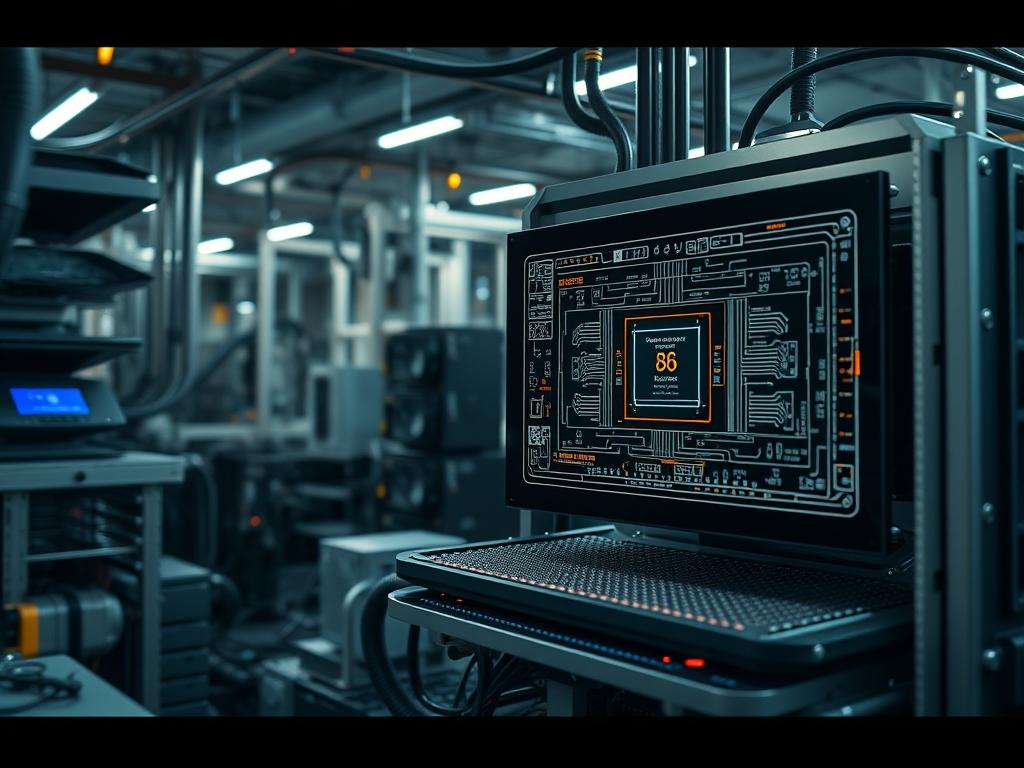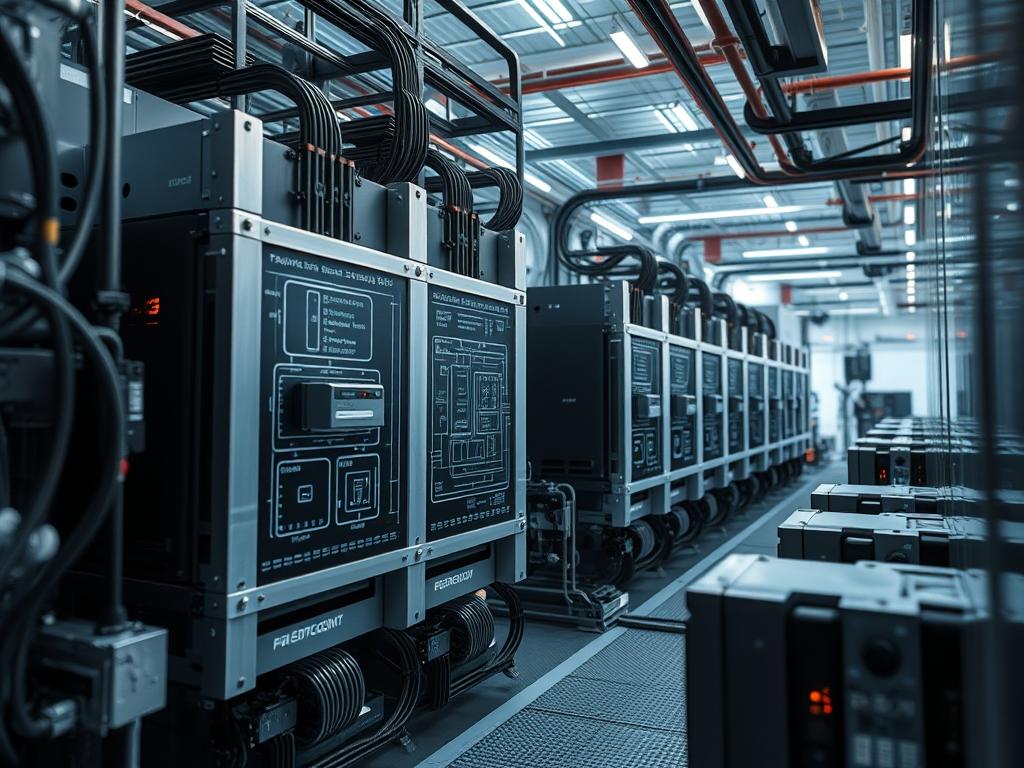
Parallel processing units serve as the core infrastructure for high density computational workloads within modern cloud environments. In technical ecosystems where sequential processing introduces prohibitive latency; these units utilize massive concurrency to manage multi-terabyte datasets. The primary problem addressed by this architecture is the traditional Von Neumann bottleneck where the linear flow of instructions restricts the overall throughput of a system. By deploying parallel processing units; architects can distribute complex tasks across an execution thread matrix that operates independently of the primary system bus. This solution requires deep integration between the hardware abstraction layer and the software kernel to ensure that every payload is processed with minimal overhead. The objective of this manual is to provide a comprehensive guide for the installation; configuration; and auditing of these units within a high availability network stack. Each component is designed to maximize data encapsulation while minimizing signal-attenuation across the physical backplane.
TECHNICAL SPECIFICATIONS
| Requirement | Operating Range | Protocol / Standard | Impact | Recommended Resources |
| :— | :— | :— | :— | :— |
| Thread Density | 1024 to 16384 Cores | IEEE 754-2019 | 9/10 | 128GB HBM3 Memory |
| Bus Interface | 32 GB/s to 128 GB/s | PCIe 5.0 / CXL 3.0 | 8/10 | x16 Slot Allocation |
| Thermal Threshold | 45C to 85C | ISO 21101 (Thermal) | 10/10 | Liquid Cooling / High Airflow |
| Logic Frequency | 1.8 GHz to 2.8 GHz | Synchronous Clock | 7/10 | VRM 20-Phase Power |
| Data Integrity | ECC / Parity | SECDED Protocol | 9/10 | Dedicated Logic Controller |
THE CONFIGURATION PROTOCOL
Environment Prerequisites:
Successful deployment requires a host system running a Linux kernel version 5.15 or higher to support the latest CXL (Compute Express Link) drivers. The underlying hardware must support IOMMU (Input-Output Memory Management Unit) for secure memory virtualization. All configuration must be performed under sudo or root privileges. Ensure that the gcc compiler and make utilities are updated to the latest stable versions to facilitate the compilation of vendor-specific kernel modules. Physical requirements include a dedicated power rail capable of delivering stable current at 300W with less than 1 percent ripple to avoid logic errors triggered by voltage fluctuations.
Section A: Implementation Logic:
The engineering philosophy behind the execution thread matrix relies on the principle of SIMT (Single Instruction, Multiple Threads). Unlike standard multi-core processors that focus on task parallelism; parallel processing units emphasize data parallelism. The theoretical logic involves stripping the payload of non-essential metadata at the gateway and mapping the raw bits into a memory space shared by thousands of lightweight threads. This minimizes the latency typically associated with context switching within the operating system kernel. By maintaining idempotent state across all execution branches; the system ensures that identical inputs always yield identical outputs regardless of the thread order. This design effectively mitigates thermal-inertia by distributing the heat signature across the entire die surface rather than concentrating it in a single high frequency core.
Step-By-Step Execution
1. Verify Hardware Link Status
Execute the command lspci -vvv | grep -i “accelerator” to confirm that the host bridge recognizes the unit at the physical layer.
System Note: This action queries the Peripheral Component Interconnect bus to ensure the hardware is seated correctly. Failure to see the device here indicates an improper mounting or a failure in the BIOS/UEFI initialization sequence.
2. Initialize Driver Framework
Install the baseline drivers using apt-get install ppu-driver-kmod or the relevant package manager for your distribution.
System Note: This command loads the binary blobs into the kernel space; allowing the operating system to interface with the discrete logic of the parallel processing units through the /dev/ppu0 interface.
3. Configure Memory Mapping
Edit the configuration file at /etc/default/grub to include the parameter iommu=on and ppu_mem_reserve=16G.
System Note: By modifying the bootloader; you allocate a contiguous block of physical RAM for the unit. This reduces page fault overhead and prevents the kernel from swapping critical execution data to slow disk storage.
4. Enable Concurrency Services
Start the management daemon using systemctl enable –now ppu-manager.service.
System Note: The daemon acts as a traffic controller for the execution thread matrix; managing thread scheduling and monitoring the health of the hardware. It ensures that the workload distribution is balanced to prevent thermal throttling.
5. Validate Permission Structures
Apply strict permissions to the device node using chmod 660 /dev/ppu0 and chown root:rendering /dev/ppu0.
System Note: Restricting access to a specific group prevents unauthorized users from injecting malicious payloads into the parallel processing stream or causing a system crash through buffer overflows.
6. Set Frequency Scaling Policy
Use the tool cpupower -c all frequency-set -g performance to lock the units into a high throughput state.
System Note: This prevents the system from entering low power sleep states that introduce significant latency during the transition back to an active processing state.
Section B: Dependency Fault-Lines:
Installation failures frequently stem from a mismatch between the kernel headers and the compiled driver source. If the kernel is updated without a corresponding rebuild of the parallel processing units’ modules; the system will face a “Module Not Found” error at boot. Another significant bottleneck is signal-attenuation on the PCIe bus; often caused by using riser cables that do not meet the PCIe 5.0 signal integrity requirements. Mechanical bottlenecks such as insufficient mounting pressure on the heat sink can lead to rapid thermal-inertia spikes; causing the unit to emergency shutdown to protect the silicon.
THE TROUBLESHOOTING MATRIX
Section C: Logs & Debugging:
When a fault occurs; the first point of reference should be the system journal. Use the command journalctl -u ppu-manager.service –since “1 hour ago” to identify recent service interruptions. Specific error strings such as “XID 31” or “Bus Error” usually point to a hardware memory violation. Path-specific logs located at /var/log/ppu/error.log provide detailed sensor readouts including millivolt fluctuations and degree-Celsius trends.
Visual cues on the hardware itself; such as a blinking red status LED; often correlate to a power delivery failure. If the log reports “Packet-loss at the Bus Level;” verify the physical connection with a fluke-multimeter at the 12V rail to ensure the power supply is not sagging under high load. For software-side debugging; use ppu-smi to view a real-time table of thread utilization and memory consumption. If throughput drops while utilization remains high; check for signal-interference in the data lanes or a driver-level resource leak.
OPTIMIZATION & HARDENING
Performance Tuning
To achieve maximum throughput; you must optimize the thread affinity settings. By pinning specific threads to physical cores; you reduce the overhead of cross-socket communication. Adjust the concurrency limit within the application configuration to match the physical thread count of the unit; ensuring that there is no over-subscription or under-utilization of the available execution matrix.
Security Hardening
Security is paramount in shared compute environments. Implement firewall rules using iptables to restrict the control plane of the parallel processing units to local traffic only. Encapsulation of the data payload using hardware-level encryption (if supported) prevents side-channel attacks that attempt to read data from the shared memory space. Ensure that all firmware is digitally signed to prevent the execution of malicious microcode.
Scaling Logic
As the demand for compute increases; the setup can be expanded by adding additional units in a master-slave configuration. Using a high-speed interconnect like NVLink or Infinity Fabric allows multiple parallel processing units to share a single unified memory address space. This horizontal scaling ensures that the system can handle increased traffic without a linear increase in latency. Maintain monitoring of the power distribution unit (PDU) to ensure that the total rack load does not exceed safe operating limits as more units are brought online.
THE ADMIN DESK
1. How do I fix a “Driver Mismatch” error?
Navigate to the source directory and run make clean followed by make install. This ensures the driver is recompiled against your current kernel headers; resolving library conflicts and ensuring the module loads successfully during the next boot cycle.
2. Why is the unit throttling under 50 percent load?
Check the thermal-inertia readings in /sys/class/hwmon/. If the heat sink is seated properly; ensure the airflow is not obstructed. High ambient temperatures or failing fans will trigger the onboard logic-controllers to reduce clock speeds to prevent hardware damage.
3. Can I run this on a virtual machine?
Yes; provided you use PCIe pass-through (VFIO). You must modify the hypervisor configuration to allow the guest OS direct access to the hardware address space. This is critical for maintaining high throughput and minimizing the latency of the execution thread matrix.
4. What causes a “Bus Signal Timeout” fault?
This is typically a result of signal-attenuation or electromagnetic interference. Ensure the unit is installed in a shielded slot and that all power cables are routed away from high-speed data lanes to prevent cross-talk and subsequent packet-loss.
5. How do I verify idempotent output?
Run the built-in diagnostic suite with the command ppu-test –verify-logic. This compares a known input-output pair across multiple thread cycles. If the results differ; it indicates a potential hardware defect in the arithmetic logic units or the memory controller.